Downtown Newark Apartment Rent: Compare Current Quotes
Compare downtown Newark apartment rent using the exact unit, lease dates, included services and payment schedule. Understand base and net effective rent.
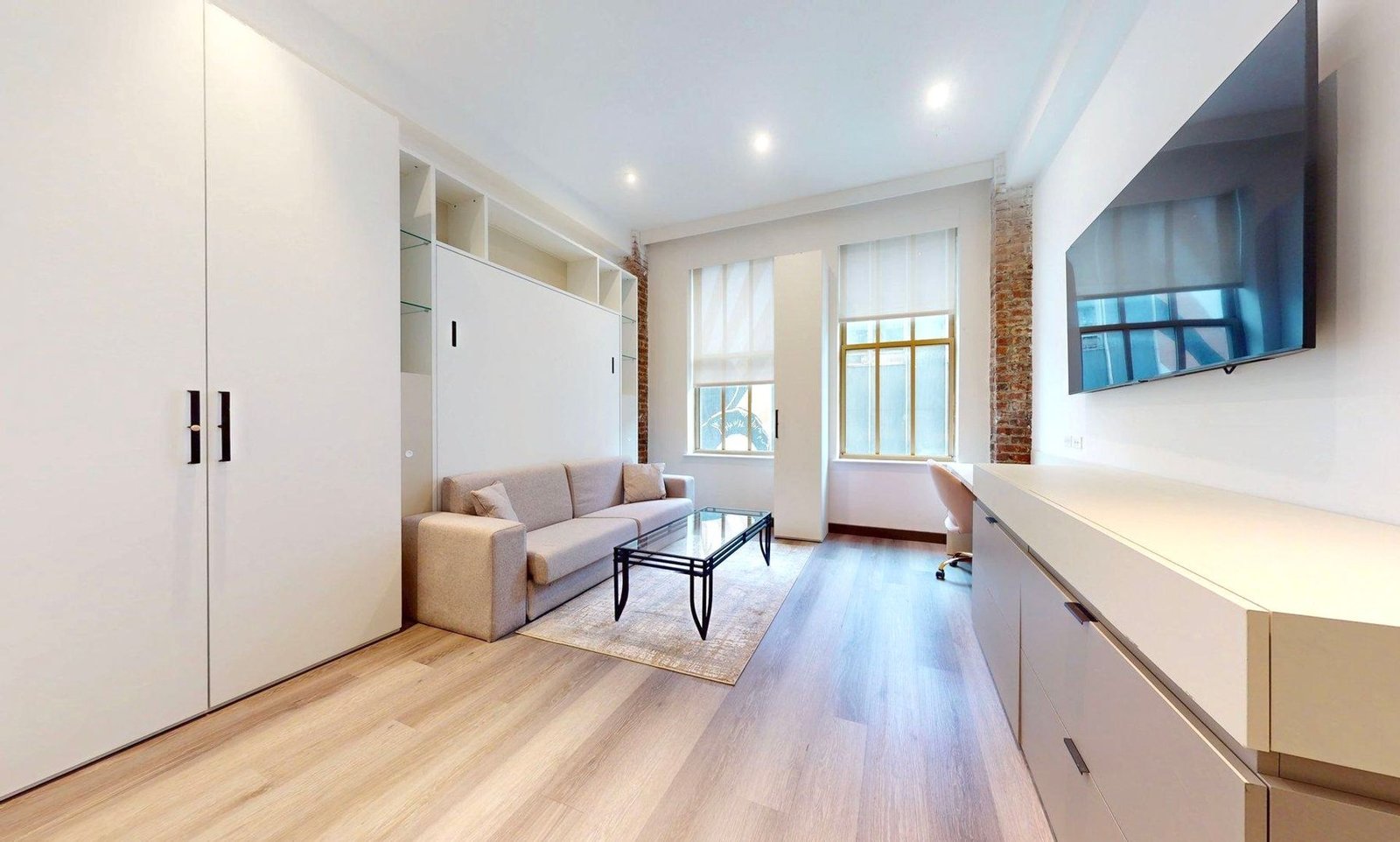
Actual 810 Gibson gallery photograph. The residence shown is representative; layouts and furnishings vary by unit.
The most useful rent comparison in downtown Newark begins with current offers for apartments you would actually consider. Broad market averages can mix different locations, layouts and service packages. They can provide context without telling you what a specific available home will cost.
If you are comparing luxury rentals, define the features you need first. Then collect written quotes covering the same move-in period and lease length. A smaller average drawn from the right homes can be more relevant to your decision than a large figure with an unclear definition of luxury.
Make the housing products comparable
Record whether the quote covers a whole apartment or a bedroom, the layout, furnishing arrangement and lease dates. Identify the unit and the date of the offer. A starting rent for a category does not necessarily describe the apartment available for your move.
810 Gibson's residence page is the place to begin checking advertised options. Its rental disclosures explain that pricing and availability are confirmed with leasing in writing. Use that current quote in your comparison rather than treating an older screenshot as an offer.
Separate base rent and an advertised average
Base rent is the recurring contractual rent before a promotional adjustment. Net effective rent usually expresses rent after a concession as an average over a period. The payment schedule tells you what is actually due each month.
For a hypothetical example, a 12-month lease at $2,400 per month totals $28,800 before concessions. If a confirmed $2,400 credit applies and no other charges change, rent after that credit totals $26,400. Dividing by 12 produces a $2,200 monthly average. That does not establish that every monthly bill will be $2,200.
This example is not a current Gibson offer. Ask how any credit is applied, what conditions attach and what happens if those conditions are not met. Put the dates beside the numbers.
Add required charges and services
For each apartment, add required recurring charges and services you would otherwise pay separately. Include optional expenses you intend to use, such as parking. Avoid filling an unanswered field with zero simply to complete the comparison.
Gibson's website lists utility and Wi-Fi inclusions, including a standard-residential-usage qualification for electricity. Obtain the selected residence's current written terms and any applicable limits. An included service should reduce another line item only when you have established what it covers.
If furnishing changes the calculation, use the furnished-versus-unfurnished guide. Furniture, delivery and storage costs should be compared over the period you expect to use the home.
Keep upfront cash beside the monthly figure
List deposits, initial rent, nonrefundable charges and moving expenses by their due dates. Identify which amounts are refundable. This shows whether you can fund the move even when the monthly payment looks workable.
For a household budget, decide how much income remains after your other commitments. A quote comparison identifies which offer costs more; it does not establish which rent you can comfortably afford.
Refresh the offers before choosing
Recheck the unit, dates and payment schedule when you are ready to proceed. Rents and availability may change, and a concession may depend on specific conditions. A dated quote is easier to evaluate than a headline remembered from an earlier visit.
Bring your preferred dates and residence type when you contact Gibson leasing. Ask for the whole offer, then compare it with the same fields for every alternative.